System type
Evaporative Cooling Aberfoyle Park
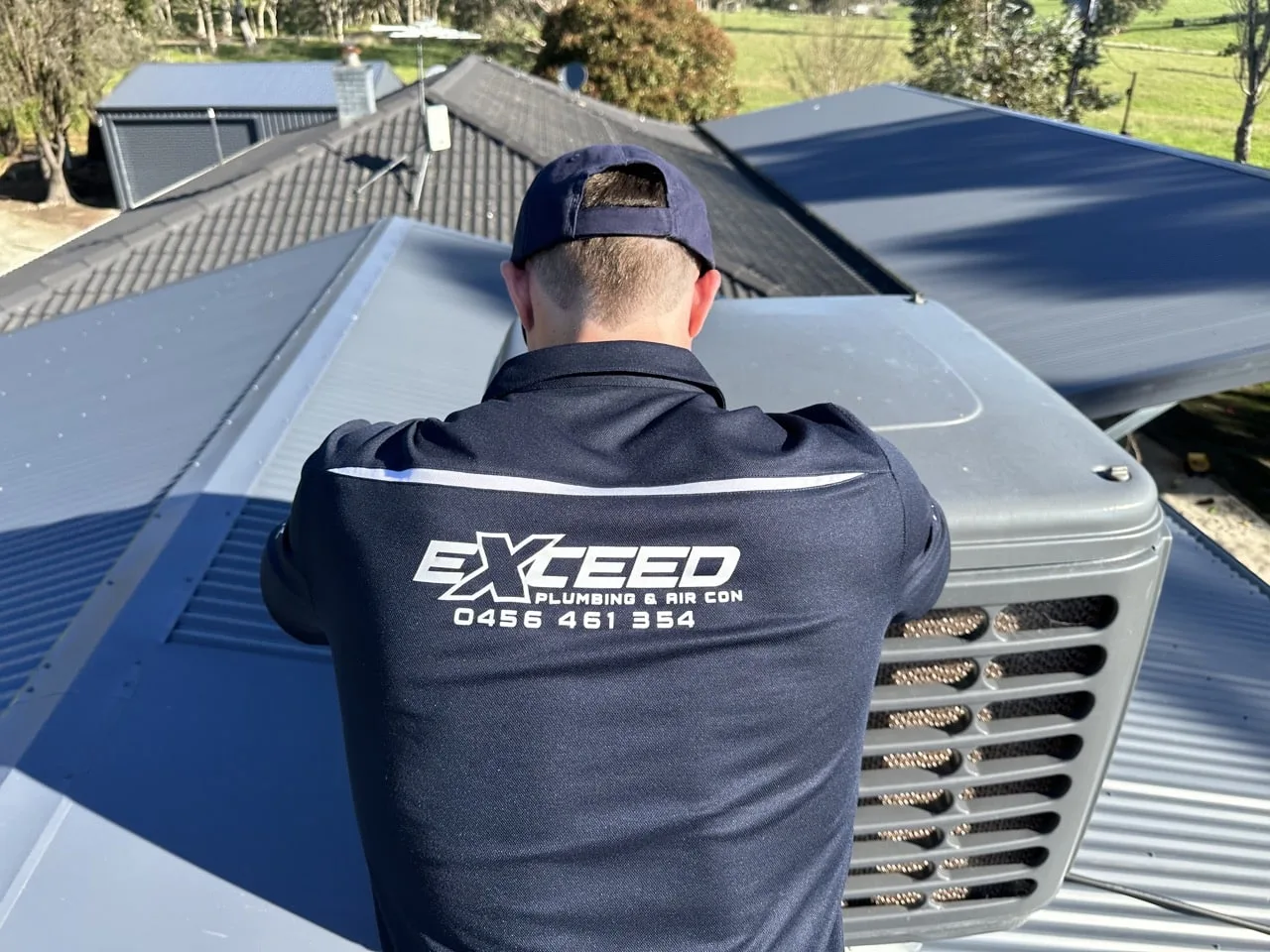
Evaporative cooling works differently to every other cooling system on the market: it does not use a compressor. It pulls outside air through water-soaked pads, cools it as it passes through, and pushes it through your home.
Different machine, different rules. That simple mechanism is why it costs so little to run, and why it suits a dry climate like ours.
We install, service and repair evaporative units across Aberfoyle Park and the southern suburbs. If yours has sat on the roof unloved for years, or you are weighing one against a ducted system, this page sets out what the machine does and who it suits.
What an Evaporative System Actually Is
The unit sits on your roof. A fan draws hot outside air through pads kept wet by a water pump, and the dry air loses temperature as it passes through the moisture. Cool air then flows into your rooms through ceiling vents.
Two things follow from that, and both surprise people who grew up with split systems:
The house runs under positive pressure
It needs water as well as power
It is not a cheaper split system. It is a different machine with different trade-offs, and on a 40-degree dry Adelaide afternoon those trade-offs mostly land in your favour.
The Homes That Get the Most From It
Aberfoyle Park's housing stock is overwhelmingly single-storey detached brick veneer, built through the 1980s and 1990s on blocks larger than the newer growth-corridor estates. That is close to ideal territory for evaporative cooling.
Here is why the fit works:
Roof space
Whole-of-house airflow
Low density
It suits less well if your home is sealed up for split-system cooling, or if you expect one system to cover winter. Evaporative does not warm a house. For winter you pair it with a ducted gas heater or reverse-cycle units, which is a common setup in this suburb.
Running Cost Through the Seasons
The economics of evaporative cooling are seasonal, and honesty about that is the whole point of this page.
Summer, dry days:
Summer, humid days:
If those few days matter to you, a split system in one room as a backup covers the gap.
Winter:
How an Evaporative Install Runs
An evaporative install is a roof job with ducting through the ceiling, and the details matter more than most people expect.
The work breaks down like this:
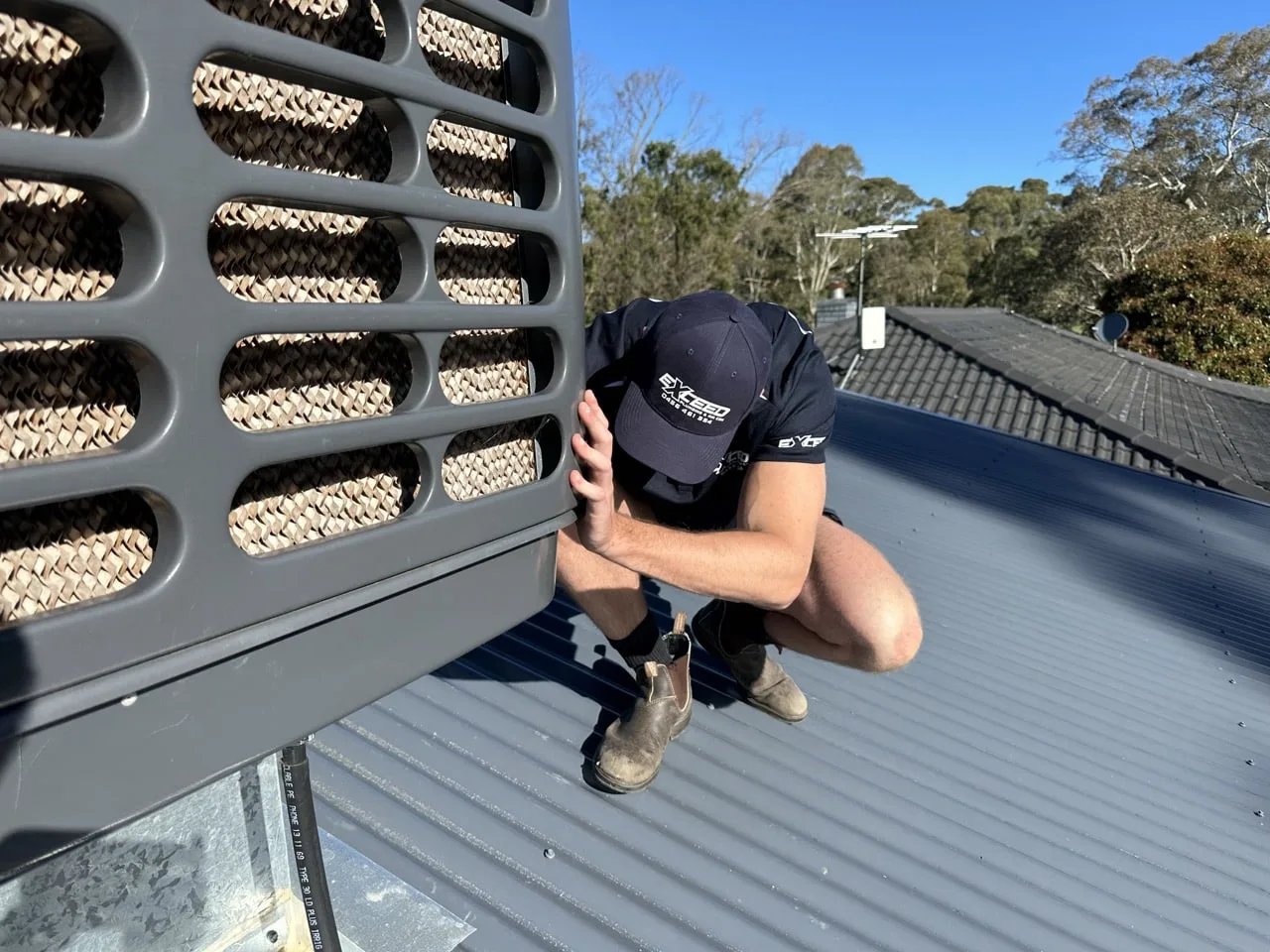
Roof unit placement
Dropper and ducting
Water line
Vent placement
We quote all of this under Fixed Upfront Pricing, so you see the full figure before anyone goes up a ladder. If you are comparing against other options, we install and service those too, and we will give you the honest comparison rather than push one machine.
Start with our installation service page for the full process.
Keeping It Running
Evaporative units need annual servicing that compressor systems do not. The pads degrade, the water feed can block, and the bleed-off needs checking to stop the water going stale.
A unit that skips its service starts to smell. A smelly evaporative system is almost always a service problem rather than a replacement one. We cover the annual clean on our cleaning page.
Repairs when something fails sit with our repairs team. If the unit is beyond saving, we handle replacement as well.
Questions
FAQs
Does evaporative cooling work on humid days?
Not well, and that is the honest answer. The cooling effect relies on dry air passing through the wet pads, so on Adelaide's handful of humid summer days the performance drops right off.
Do I really need to leave windows open?
Yes, because the unit pushes outside air through wet pads and into the house, so the air has to go somewhere. Running it sealed up like a split system is the most common mistake we see.
What does the unit do over winter?
Nothing, and it should not be run. It is a cooling-only machine with no heating mode, so winter warmth needs a ducted gas heater or reverse-cycle units alongside it, a common pairing in this suburb.
How often does an evaporative system need servicing?
Once a year, before summer, covering the pads, water feed, bleed-off and drain. A unit that skips its service starts to smell or lose airflow, and that is a service job rather than a replacement.
Is evaporative cheaper to run than a split system?
On dry summer days, yes, noticeably, because it runs a fan and a small water pump instead of a compressor. The trade-offs are water use alongside power, and reduced effect on humid days.
Talk to a local
Talk It Through With Us
Thinking an evaporative unit might suit your place? Call (08) 8246 6297 and we will talk it through, honestly, including the days it will not perform. Every job is quoted under Fixed Upfront Pricing, the work carries our Lifetime Labour Warranty, and we are available 24/7 for urgent cooling problems.